
I was first introduced to the 19th century British photographer Julia Margaret Cameron as an undergraduate art history student, through photographs like The Parting of Sir Lancelot and Queen Guinevere. My professor did his best to present her as an artist in her own right, sandwiched chronologically between Henry Peach Robinson and Timothy O’Sullivan, but the criticism she faced in her own time — that her photographs weren’t technically proficient, her subject matter was unserious and imaginative — follows her, remaining a prominent part of her story. She is talked about as an interesting case study in the history of photography, or proof that not all early photographers were men, or to show the stylistic possibilities offered by collodion glass negatives. I have since realized, perhaps unsurprisingly, that many people are generally unfamiliar with her outside of the field of art (and more precisely, photography) history. But the exhibition “Julia Margaret Cameron: Arresting Beauty,” at the Jeu de Paume in Paris, seeks to change that.
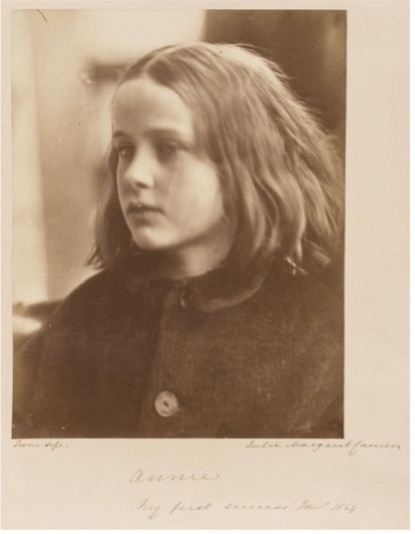
Considering the scope of Cameron’s body of work, which consists of some 1,200 photographs, the exhibit — which occupies the lower gallery space — shows enormous consideration and restraint in its curation. Cameron was gifted her first camera in 1863 at the age of 48, and made almost all of her photographs in the ten years that followed. The exhibit unfolds in roughly chronological order, starting with the photograph of a young girl named Annie, taken in 1864, a work which she labelled her “first success,” before moving on to her portraits of famous writers and public figures. It even gives a taste of the work she produced in Ceylon (Sri Lanka) after she and her husband returned there in 1875. (Cameron, the daughter of an English official in the Bengal civil service, was born in Kolkata and grew up between colonial India and France; she and her husband moved to the Isle of Wight in 1848, after he retired from colonial service.)
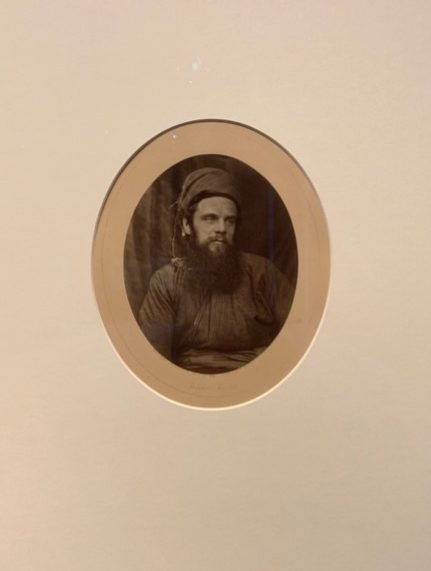
In addition to taking a more or less chronological view, visitors are encouraged to look at the photographs as belonging to one of Cameron’s three self-defined categories: “portraits,” “Madonnas,” and “subjects of the imagination,” as explained in wall texts. All of the photographs shown are large-scale, soft-focus portraits — Cameron’s style and preferred subjects didn’t change much over the course of her career — but the curators have taken great care to explain stylistic and thematic influences as well as historical context of the photographs and their subjects, resisting a facile oversimplification of her work. Visitors are introduced to members of Cameron’s circle, including her niece Julia Jackson (Virginia Woolf and Vanessa Bell’s mother) and her friend and neighbor Alfred Tennyson, as well as prominent British figures who sat for her — Charles Darwin, the writer and abolitionist Henry Taylor, and the pre-Raphaelite painter William Holman Hunt among them.
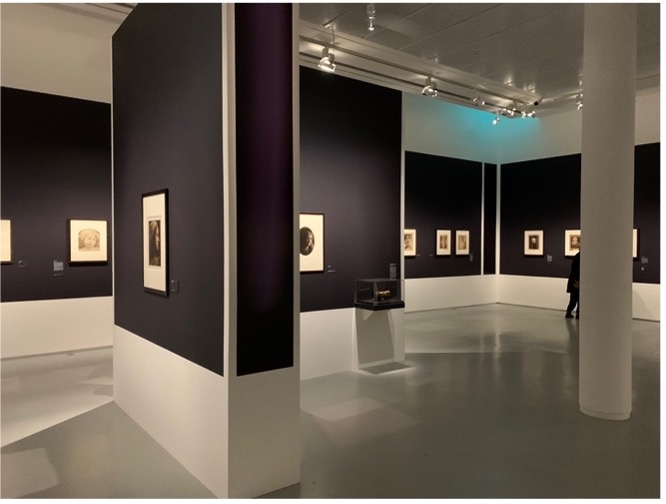
All of the portraits are hung at eye level and evenly spaced along the walls of the three gallery rooms. There’s a natural rhythm to the space, moving from one portrait to the next as you would flip the pages of a photo album (Cameron liked to package her photographs in book format to distribute them to friends and family), but the presence of half walls in the center of each gallery keeps the path through the works from becoming too monotonous. The scenography helps plunge visitors into Cameron’s world, too: the space seems to loosely quote a 19th century parlor, with its low lighting and walls painted deep violet and midnight blue. The dimness of the space throws the photographs — all sepia-toned and identically matted with cream board — into sharper focus; the portraits appear almost luminous. The beauty of Cameron’s works is put on display in this show, and it is, indeed, arresting.
The show, organized by the Victoria and Albert Museum — which holds the world’s largest collection of Cameron’s work — is an interesting choice for the Jeu de Paume, given the museum’s usual focus on modern and contemporary photographic and video practices. It’s the first retrospective of the artist’s work in Paris, and it comes on the heels of other major retrospectives of woman artists, like last year’s Joan Mitchell exhibition at the Fondation Louis Vuitton. Similar to Mitchell’s show, which was organized by the Baltimore Museum of Art and the SF MoMA, Cameron’s show helps redress the systemic exclusion of women artists from major museums for decades and makes a case for her inclusion in the art historical canon. Unlike at the FLV, which added their own accompanying exhibition “Monet Mitchell,” the Jeu de Paume doesn’t pander to an unfamiliar audience or attempt to legitimize Cameron’s work by hanging it next to the works of her more famous (male) predecessors or contemporaries. It’s a refreshing way to encounter an artist — especially this, which is potentially the first introduction to Cameron for many visitors. She is presented as an artist in her own right, without qualification, without comparison.
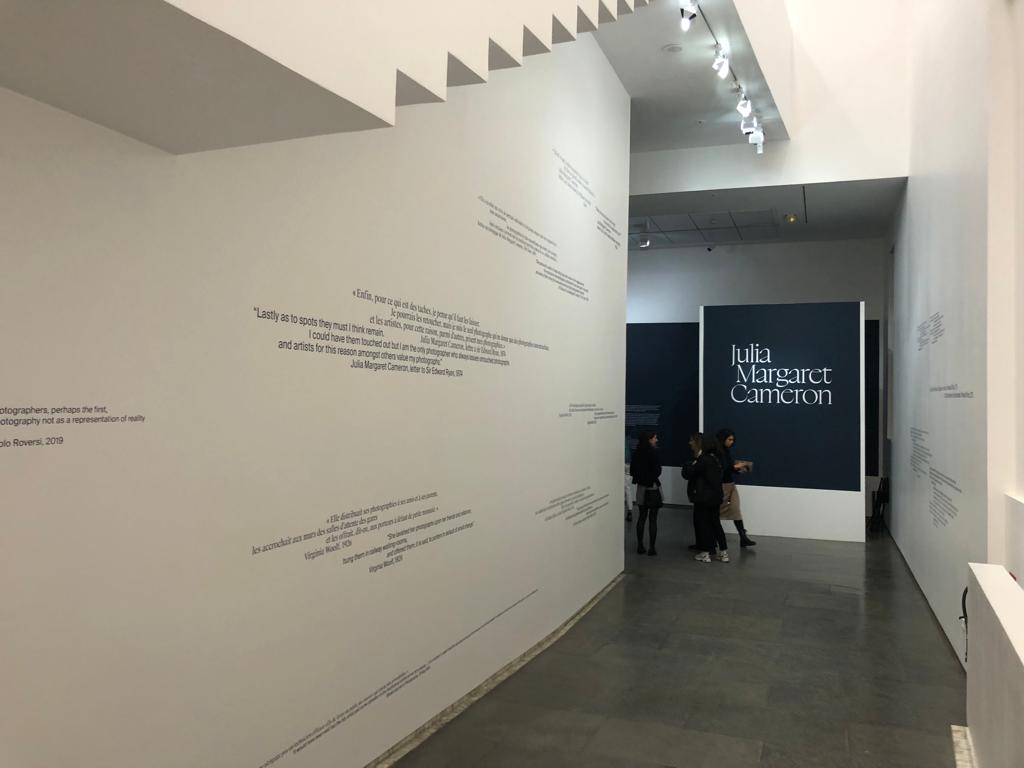
Cameron’s life and persona is also painted in engrossing, humanizing detail. Wall texts explain that Cameron wasn’t taken seriously as a photographer or artist in her own day, sometimes citing the withering criticism she received. The walls of the hall leading to the exhibition are peppered with quotes from famous artists, musicians, and newspapers about Cameron, showing the ways she’s been talked about for the last 150 or so years. One quote, from an 1865 issue of The Photographic Journal, reads in part: “We must give this lady credit for daring originality, but at the expense of all other photographic qualities […] In these pictures, all that is good in photography has been neglected and the shortcomings of the art are prominently exhibited.”
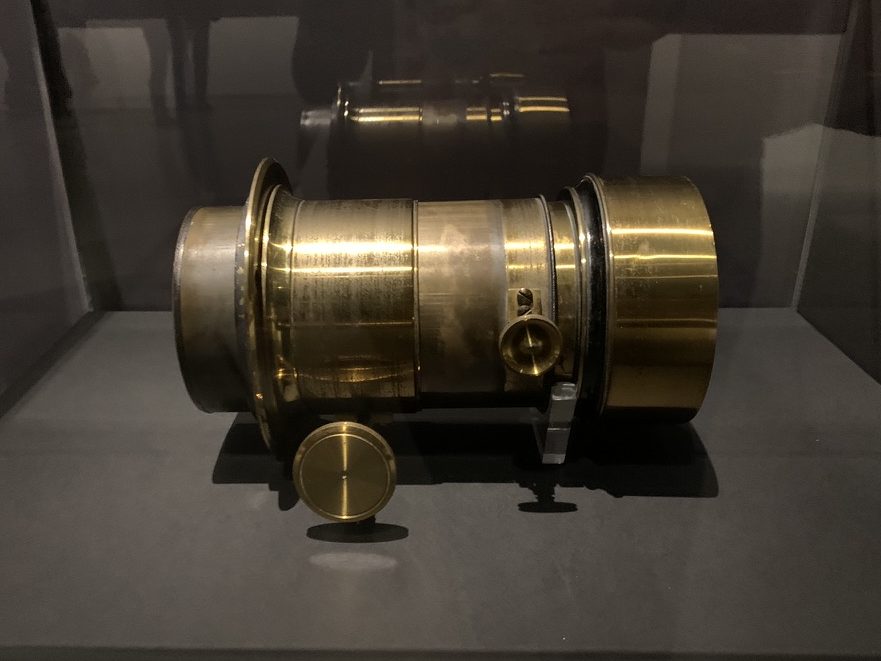
It’s striking to read what all these voices — ranging from Nan Goldin to Patti Smith to CNN and The Times — have to say about Cameron, whether disparaging or admiring, before you’ve even seen her work. Then, the exhibition asks you to look at Cameron’s work the way she wanted it to be seen, with all of its attendant material, stylistic, and narrative context. There are a few artifacts sprinkled through the exhibit that reinforce this view: her photographic lens, for example, which she wrote was to her “a living thing,” or the enormous volume of Tennyson’s Arthurian Idylls of the King poems, which wrote out by hand and illustrated with original photographic prints in protest of the publisher’s transformation of her images into smaller woodblock prints.
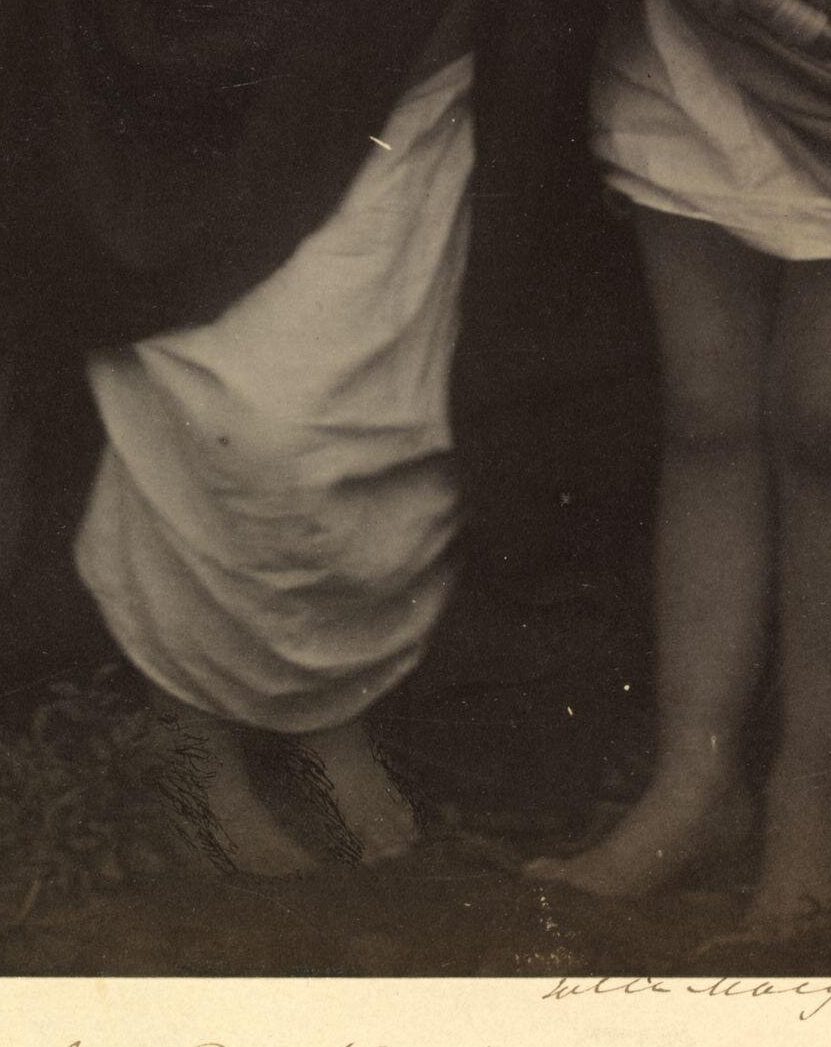
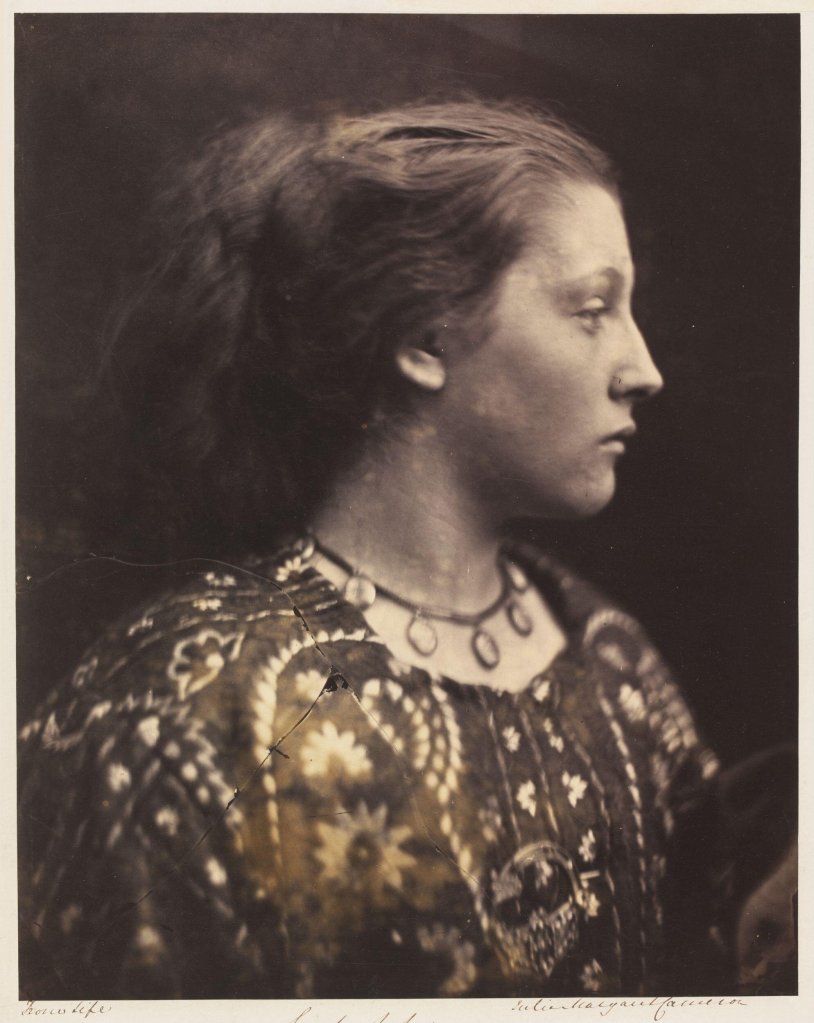
The exhibition is strongest in these instances where the trace of Cameron’s touch is highlighted — a portrait of a girl dressed as Sappho printed from a broken negative, giving it the look of a cracked and repaired antique plate; a boy dressed as Paul from Jacques Henri Bernardin de Saint Pierre’s novel Paul et Virginie, whose feet Cameron scratched out to make them look smaller; or a portrait entitled The Dream, which bears two black fingerprints in the lower right corner, and which Cameron read as a kind of signature. Not only do these moments attest to the handmade quality of the photographs, they also give a sense of Cameron’s personality and identity as an artist. To that point, I wish the exhibition had given more attention to the technical side of her work, seeing as much of Cameron’s style developed out of her experimentation with the physical processes of photographic development and printing. The average visitor, I imagine, is probably unaware of how photographs were made in the 19th century, and might gloss over the references made to her process. But these instances where her technical intervention is highlighted, paired with the contemporary critical jabs quoted in wall texts, suggest a woman entirely sure of herself, unafraid to experiment and make mistakes, who had a clear vision of the art she wanted to create — she was, presumably, unfazed by these critiques.
The final portrait visitors see as they exit the gallery is the only photograph in the exhibition not made by Cameron — it’s a portrait of the artist taken by her son, also a photographer. (She never made a self-portrait over the course of her photographic career.) The image comes almost as a shock. Cameron’s presence is so clearly felt through her portraits that it is unsettling to realize, as I did, that I did not actually know what she looked like.
Fans of Cameron will be delighted with this presentation of her work, while those who are uninitiated will appreciate the thorough yet manageable introduction to a pioneering artist. At Jeu de Paume, this exhibition promises to introduce Cameron to a new, international audience, cementing her status as one of the most important early photographers in Europe.
“Arresting Beauty: Julia Margaret Cameron” is on view through January 28, 2024 at the Jeu de Paume.
Figures
- Cameron, Julia Margaret. Annie. January 1864. Albumen print from wet collodion glass negative. Victoria & Albert Museum Department of Photography. https://collections.vam.ac.uk/item/O1427635/annie-photograph-cameron-julia-margaret/. ↩︎
- —-. Paul and Virginia. 1864. Albumen print from wet collodion glass negative. Victoria & Albert Museum Department of Photography. https://collections.vam.ac.uk/item/O1433670/paul-and-virginia-photograph-cameron-julia-margaret/. ↩︎
- —-. Sappho. 1865. Albumen print from wet collodion glass negative. Victoria & Albert Museum Department of Photography. https://collections.vam.ac.uk/item/O1429726/sappho-photograph-cameron-julia-margaret/. ↩︎
 sarah feustle
Leave a comment