
Despite the fact that I’ve spent a lot of time studying and thinking about photography, it was only recently that I read Roland Barthes’ Camera Lucida for the first time. (This is perhaps chalked up to my aversion to reading anything by Barthes — an attitude that stems from reverberations of the fear that Barthes’ name instilled in me as an undergrad, rather than anything to do with his ideas). I had the same feeling reading it as I did upon reading Susan Sontag’s On Photography for the first time: even if some ideas have not entirely withstood the test of time, even if some I do not wholly agree with, the overall effect of the book is revelatory.
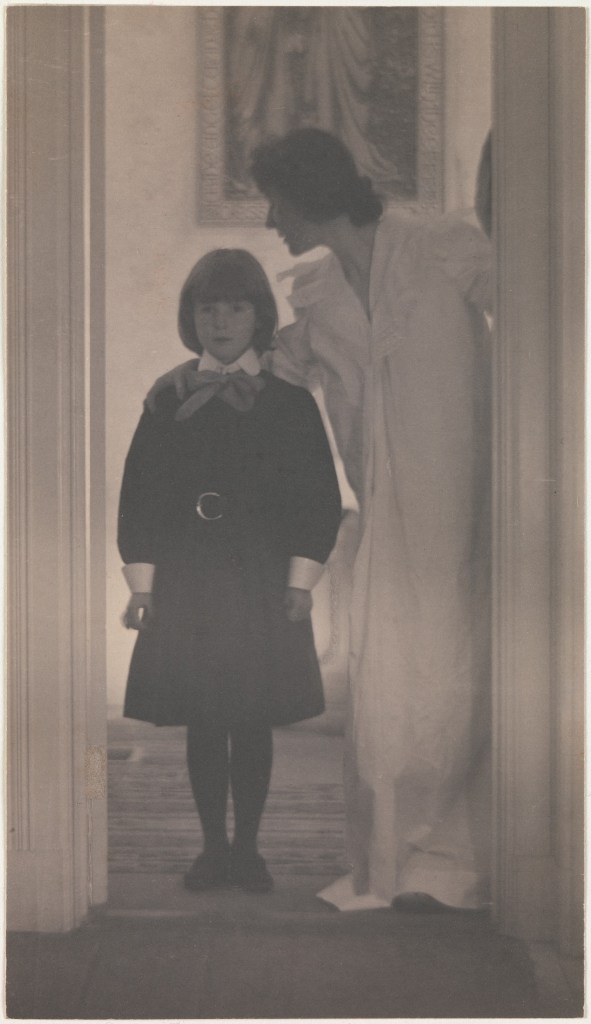
Barthes gives a clear voice to so many of the complicated thoughts and feelings I have when looking at photographs; how to explain why I went most of my life unimpressed with photography as an art form, only to be shown a photograph in an art history seminar that moved me so much, that it changed my idea of the medium, changed the course of my studies, and as a result, my life? (The photograph in question is Gertrude Käsebier’s “Blessed Art Thou Among Women;” why it had such an effect on me, I can no longer remember.) This is not to say that Camera Lucida fully elucidates the matter of what photography is, in its multitude of forms and applications, but rather that it feels at once familiar and brand new: my thoughts and feelings about photography given a language.
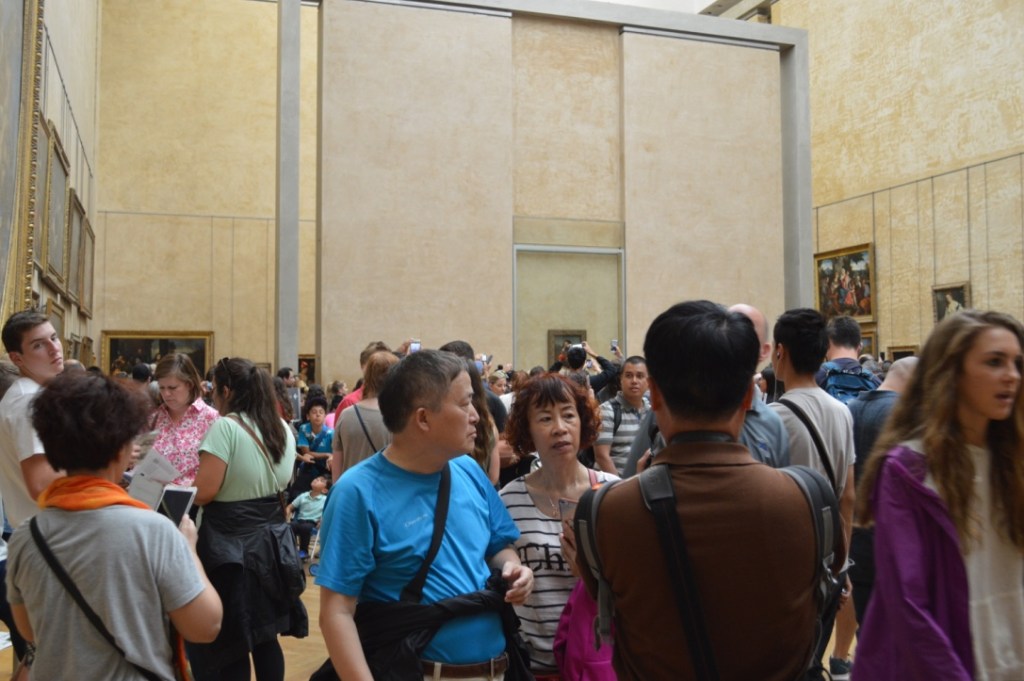
This was especially the case with his identification of the studium and the punctum as part of the essence of photography. Though I did not always share Barthes’ assessment of what qualified as the punctum of different photographs, or if certain photographs did or did not contain this element — and I am sure he and I and others would disagree on our readings of many photographs — this idea reflected my own experience of studying photography. I have long struggled to explain in clear, concise terms why certain photographs move me, while others do not (even if I am interested in them as documents) — Barthes would say that the studium is the element that explains my general interest, while the punctum is what makes me connect with those certain photographs. This seems to me to make sense in very broad terms, but I found myself wondering what Barthes would have to say about this in the age of digital photography: do thousands of almost-identical tourist photos of, say, the Mona Lisa elicit one’s studium? Does the studium wear out at some point? I have seen so many pictures of the Mona Lisa (and pictures of people taking pictures of the Mona Lisa, and the painting itself, etc.) that I do not think I could invest my studium, my interest, into a single such photograph anymore.
Like with Sontag, something I especially appreciated in Camera Lucida was Barthes’ style and approach, particularly the way he inserted himself — his feelings, his impressions and experiences — into his theoretical analysis. This made reading the book, particularly Part II, an uncanny experience at times. In Barthes’ eulogizing of his mother via the Winter Garden photograph, he said that he would not reproduce the photograph because “It exists only for me […] in it, for you, no wound” (73).1 It brought to mind a photograph, one of my own family, that haunts me: it is a photograph of my maternal great grandmother, along with her mother and grandfather, standing outside their house on a farm in southern Gotland, Sweden’s largest island. My sister, trying to reconstruct a genealogy of our mother’s family (a complete mystery to us, as they are all dead or estranged), found this photograph on an online photographic archive of the region, and sent it to me. It is not a remarkable photograph — grainy and cluttered; the figures are small and the house unremarkable — and yet I think about it with surprising frequency. I read the rest of Barthes with this photograph in mind, thinking that his words could help me understand my own fascination with this rather unremarkable photograph. First, his establishment of the essence, the noeme of Photography, that which distinguishes it from other art forms: that-has-been; the fact that “I can never deny that the thing has been there.” (76).
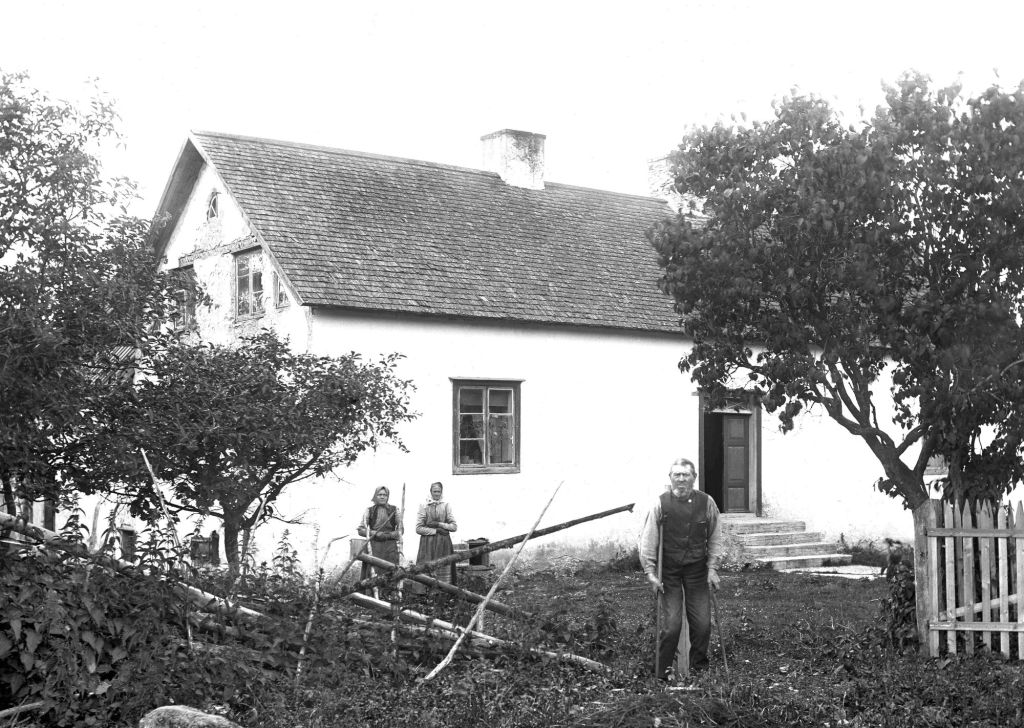
Before this photograph of my great-grandmother, I had no solid evidence that my family came from Sweden: no birth records, no family albums, nothing tangible. There were stories passed on, family recipes, the ring bearing the initials of my grandfather — also named Roland, strangely enough — which I now wear. I know everything of my father’s family: I have seen photographs and home movies dating back generations, have met many of them before they died, grew up surrounded by them. But my mother’s family remained a blank space in my imagination. Maybe their lives happened the way I was told, or maybe not. But here she was, my Roland’s mother, a photograph of her in a Summer Garden, as it were. Proof that she was real, that she was really there, that she lived in a place thousands of miles away, one I could find on a map; I could never deny that she was there. My revelation is not even as profound as Barthes’ — he finds a photograph that shows, by his estimation, a real vision of his mother, whereas mine shows she was, indeed, real — and yet, it upends me. From what I know of my grandfather, he was not a sentimental man; what would his reaction of this photograph of his mother in her youth have been? Perhaps the wound, not having been tended to, has been passed on to me.
Taking Husserl’s proposition of the “constitutive style” of the filmic world, Barthes writes that the photograph, as opposed to film or reality, breaks this style; “it is without future.” (90) I see my Roland’s mother, as Barthes sees his, trapped in the amber of the photograph. It exists outside of time. But Barthes also writes of the “anterior future” held within a photograph: in looking at a photographic portrait of Lewis Payne, awaiting his execution, Barthes reads “at the same time: This will be and this has been” (96). The punctum as time: he knows Payne’s fate, as he knows his mother’s fate, as I know my great grandmother’s fate: they are all dead, despite their photographed liveliness. I imagine the same of landscapes: the farm in my picture has doubtless changed, much like American landscapes, so wild in 19th century photographs, have since been tamed. The death (literal or metaphorical) of a person, a place; the knowledge of what is to follow.
Barthes cites Sontag when he writes that the chemists, not the painters, are the ones who invented photography: “The photograph is literally an emanation of the referent. From a real body, which was there, proceed radiations which ultimately touch me, who am here […] the photograph of the missing being, as Sontag says, will touch me like the delayed rays of a star.” (80-81). A photograph as something akin to a footprint in cement: an indelible mark made by one person, the trace of which attests to the that has been, the trace that could not exist without that person, that captures the presence of that person.
Unlike Barthes, I have shown my photograph to many people, not yet understanding that the wound was mine alone. I was, to take Barthes’ word, astonished — this was her, the invisible ancestor of my childhood imagination, rendered before my eyes in black and white. I can see now that it elicits others’ studium — that’s so interesting, they say — but it does not pierce them. One person, seeing it, said It’s so special that you have this. But I do not have it, not in any literal or meaningful sense. I only learned of this photograph’s existence a year ago; the copyright is held by some unknown entity; I do not have the original image, or a print of it, or even know where the image is, or if it still exists. All I have is the photograph of the photograph, and that on the screen of my computer. I cannot touch the captured rays of light that emanated from my great grandmother. The photograph I know shows her body, but it does not embody her in the same way. It would have been an entirely different experience to encounter the photograph organically, as Barthes did, but I would never have found my photograph had it not been scanned and published online. I can only wonder if it has it lost some essential quality. (A question for Walter Benjamin, perhaps, in any case.)
So too does Barthes’ analysis fall flat in the digital age when he writes about transformation of the photograph: “like a living organism, it is born on the level of the sprouting silver grains, it flourishes a moment, then ages … Attacked by light, by humidity, it fades, weakens, vanishes; there is nothing left to do but throw it away” (93). This is no longer true of most images: they were either digital from the beginning, or they have been transformed into digital objects. Things can be deleted, or misplaced, of course, and original prints will still deteriorate with age, but what happens to us when all images are, essentially, permanent? I think Barthes resolves this to a degree: “What is it that will be done away with, along with this photograph […]? Not only ‘life’ (this was alive, this posed live in front of the lens), but also, sometimes — how to put it? — love” (94). Even if the Photograph now lives forever, perhaps the punctum can still die, so to speak. The Winter Garden Photograph, wherever it may be, will never speak to anyone in the way it spoke to Barthes. Though the gaze with which I look at my Winter Garden Photograph is not imbued with the same love that Barthes’ was, I know that I am one of the only people who could see this photograph in this way, see its anterior future: that she left Gotland, that she became mother to Roland and then grandmother to my mother. My existence is proof, in part, that it all happened.
After I wrote these reflections, I spoke to my sister about Barthes and our great-grandmother’s photograph, knowing that she would almost surely share the strange feeling I had about the image. What I did not know was that, about a year before, my sister had also read Camera Lucida, had also had this photograph in mind, had also written down her reflections on the experience for a class assignment. My unique experience not so unique after all: and yet, how much stranger and more wonderful that this simple photograph had the same effect twice over. Perhaps there really is something to what Barthes wrote, a kind of mystical, or at least affective, power to the noeme.
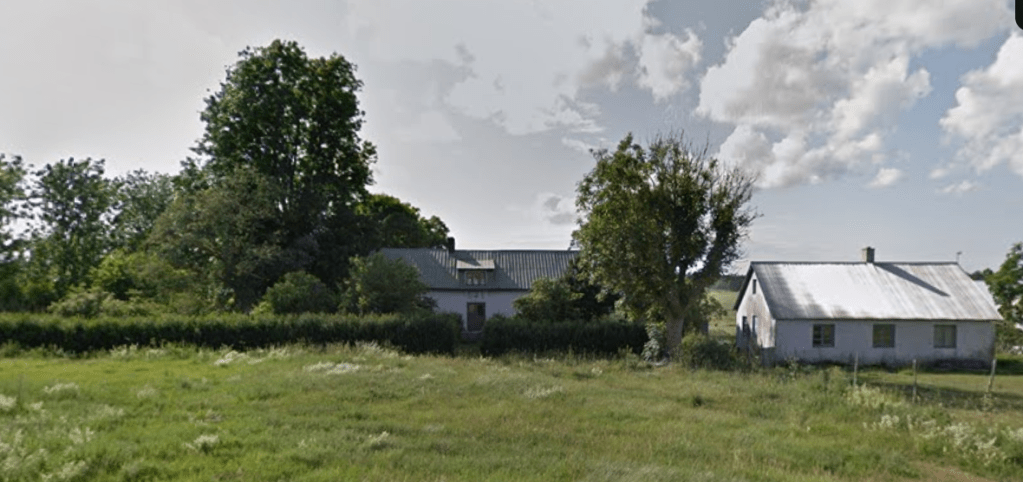
It did not feel like enough to simply see the photograph on a screen. I found the house, renovated but still standing, thanks to the archive and Google street view. The roof is now a pale green, the driveway is unpaved. Someone down the road was mowing their lawn when the Google imaging car last drove by in 2011. But still, a screen between myself and the exterior thing.
Barthes has something to say on the desire to uncover our origins, too, and perhaps it helps to explain my fascination with this part of my family — a near-obsession that stretches back many, many years. He writes:
Lineage reveals an identity stronger, more interesting
than legal status — more reassuring as well, for the thought
of origins soothes us, whereas that of the future disturbs us,
agonizes us; but this discovery disappoints us because even
while it asserts a permanence (which is the truth of the
race, not my own), it bares the mysterious difference of
beings issuing from one and the same family […] (105).
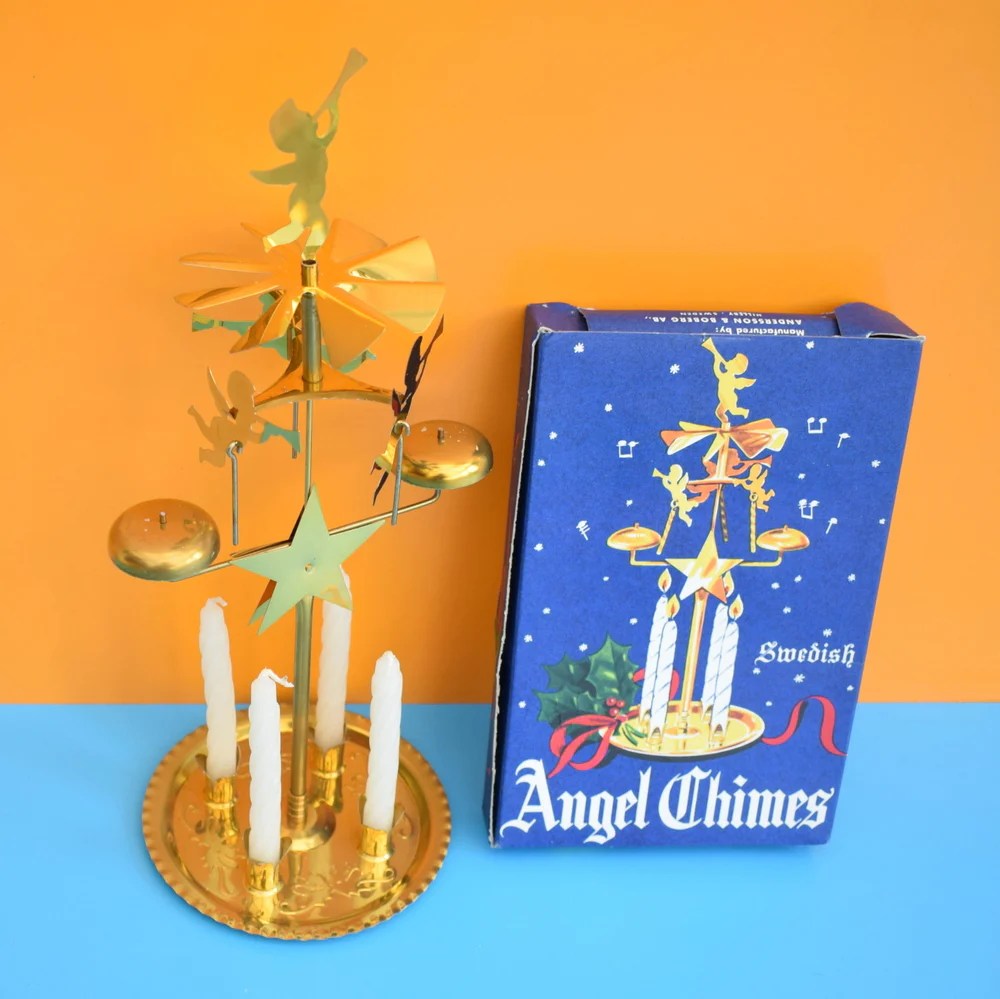
I did want a discovery of my origins to soothe me, give me the answer to what I should do in my life, where I should go. My dad’s family history was too simple; I lived in the same part of the world they had all lived for over a hundred years, and I craved a more interesting truth. This, coupled with the fact that I became inexplicably enamored by Sweden as a seven-year-old after reading some kiddie book in a series on countries of the world. Something about the colors and photographs of blond braids and rolling fields affected me. This was, of course, the moment my mom first revealed to me the fact of her father’s childhood spent in Sweden, and my young brain latched onto this and turned it into an obsession, one which became especially strong at the holidays. The montage of my childhood Christmases in the years that followed plays out like this: making enormous batches of pepparkakor biscuits (from the recipe handed down from someone at the Swedish church in which my mom grew up to my grandmother, who had no ties to the country but took it upon herself to integrate, as it were); lighting the candles that set off the angel chimes, one of the few relics of my mother’s childhood, and then blowing them out once everyone was fed up with the insistent dinging; rolling out meatballs, opening tins of cured fish, and setting the table for our Christmas Eve smörgåsbord. I craved an origin, something that tied me to a person or a place with a force stronger than an administrative document, stronger than the house where I grew up. Hulda — who grew so homesick for Gotland that she returned there from America with her two infant children and stayed for three years — seemed my best bet at finding it. I had never felt homesick as a child, and wanted to know what that longing, two generations removed, might have to tell me.
But as Barthes says, the discovery disappoints us. This photograph asserts the undeniable truth of my ancestry, my origin, and yet being confronted with the face of my great-grandmother in a place so foreign to me, I was more distraught than comforted. How could I understand this scene as not only being real, but being a part of my own history? Could this Hulda, a kerchief tied around her head like any caricature of a peasant farm girl, be the same woman my teenaged mother visited in Florida each summer? It is perhaps this dissonance that was so disorienting: here is everything I thought I knew, everything I imagined; and here is a singular image of reality. They must be connected — why else these traditions, why else my mom’s recollection of her grandmother having an accent? — and yet it feels impossible that they are.
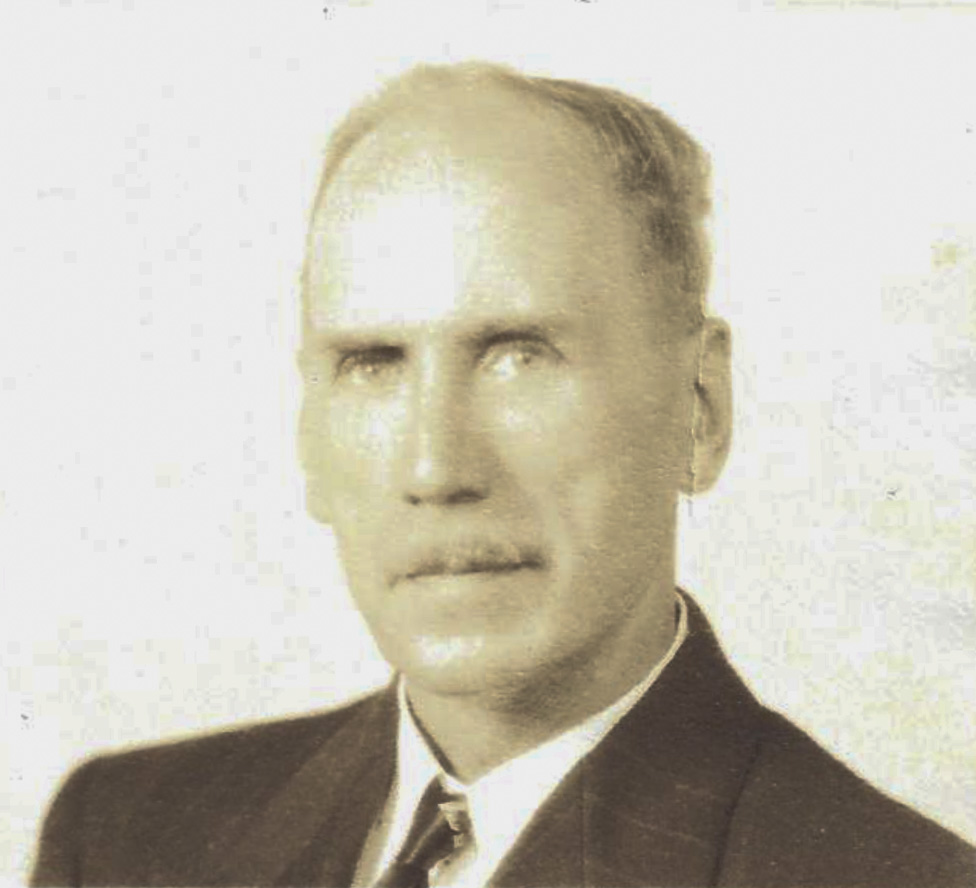
My mom, inspired in part by my sister’s genealogical research, has recently dredged up a box of old family photos and letters. Among them, no photographs of Hulda. If there are any — and there must be, somewhere, seeing as she lived until 1971 — they are with my uncle, the only other surviving member of that side of the family so far as we know, and from whom we are estranged.4 What my mom did find, though, was a photograph of her grandfather, Hulda’s husband, who was also a Swedish immigrant to America. He, Edward Knut, and Hulda met and married in Boston, where there was a tight knit community of Swedish immigrants. I expected very little from this photograph, and yet, for all its plainness — it’s a simple headshot, possibly taken on the occasion of his naturalization in the 1930s — it is every bit as shocking as the one of Hulda. In the photograph, I see not Edward but my mother looking back at me. It is her brow, her eyes, her chin in the picture. There is the undeniable proof, the noeme, the that-has-been: Edward sat for this picture, this picture only exists because he sat in front of the camera, because rays of light touched his very being. And yet, like Barthes, I feel a kind of recognition in this photo. I did not know Edward, could not have known him, and yet there is no way to deny that he is related to my mom, to me. All the more uncanny, seeing as I bear a strong resemblance to my mom; it’s often the first thing people remark upon seeing us together for the first time. I looked like my mom, so certainly my mom looked like someone too, but I had not thought to investigate this further. But here I had the evidence in front of me. When I look at Edward, I am looking in a kind of mirror of my own history.
I sent an email to Anders Wästlund, who manages the Lau historical website, asking for a copy of the photograph of Hulda and trying to communicate its importance. (I say trying, as I was writing to him in Swedish, a language I have been learning — very slowly — for the last ten years.) I didn’t know when I wrote him that it was not just the only photograph of her life in Sweden, but the only photograph of her altogether. He replied a few days later: “Vad glad jag blir när jag ser att någon hittat en unik bild på en släkting i vårt bildarkiv.”5 (How happy it makes me when I hear that someone has found a unique photo of a relative in our photo archive.) Unique, here, in the sense of singular, one-and-only, something not found elsewhere. Again, my unique experience: not so unique. It may be a unique photo for me (and my sister), but the archive is full of photos that are, potentially (and probably), unique for other families.
Something else he wrote to me has stuck in my mind. He asked me to write back to him, saying: “Vi är intresserade av få se lite hur livet utvecklade sig för de som lämnade Lau och för deras barn och barnbarn.” (We are interested in seeing how life developed for those who left Lau as well as for their children and grandchildren.) Seeing Hulda not as my mother’s grandmother, but instead seeing my mother as the grandchild of someone from Lau, the continuation of a centuries-long story, with myself the latest chapter. Barthes writes that the future agonizes us, disturbs us; perhaps this is why I have been looking back. But history isn’t as static as I had thought: the past and present can exist simultaneously (the photograph of Hulda, a literal emanation of the past, exists in my mind — and on my screen — in the present moment). I am a part of the future within the photograph, just as the photograph is part of the past that led to me. If history must be linear: it is at once a line that stretches back into the past, and a line we pull forward as we move into that agonizing future.
- All page numbers refer to the 1981 Hill & Wang edition, translated by Richard Howard, and available to read here. ↩︎
- Lau Digital Image Archive (Bildarkiv). ↩︎
- Image from an online product listing, here. The trumpeting angel figurines could be replaced with other figures, including little horses. ↩︎
- I would be remiss if I did not mention that so much of the chronology I reference throughout this essay is thanks to research done by my sister, Hannah. ↩︎
- From personal correspondance. ↩︎
 sarah feustle
Leave a comment